Loading...
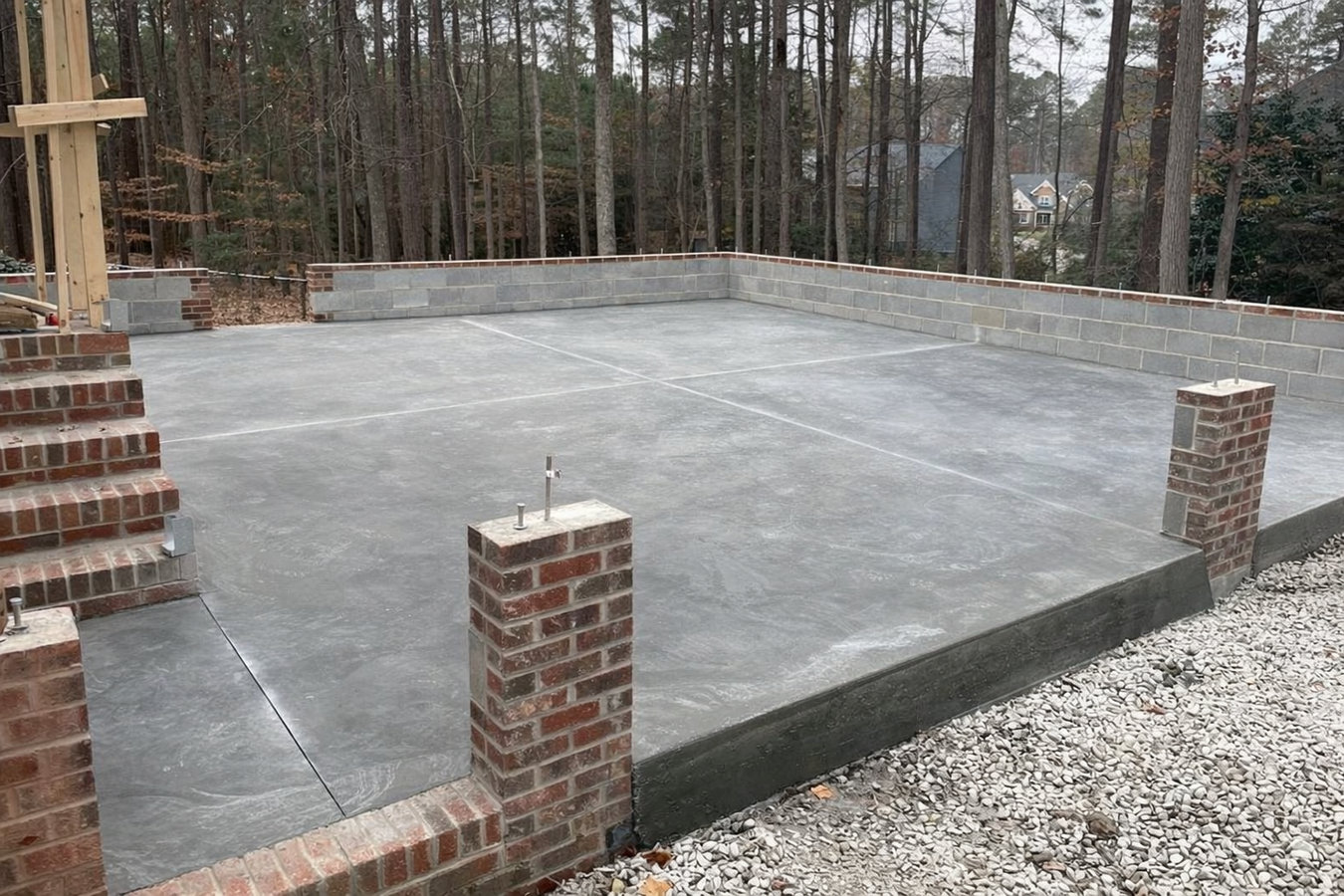
The right slab foundation in Porterville starts with understanding the soil, not just the concrete. We build slab foundations for new homes, garages, and ADUs that hold up through Valley clay movement and summer heat.
Slab foundation building in Porterville, CA means preparing the ground, laying a gravel base and moisture barrier, placing a steel reinforcement grid inside wooden forms, and pouring a flat concrete slab that serves as both the floor and the structural base of your structure - most residential pours take one day, with one to two days of prep work beforehand and about 28 days to reach full cure strength, and a City of Porterville building permit is required before any work begins.
Slab foundations are the most common foundation type in Porterville and the surrounding San Joaquin Valley. The flat terrain, dry climate, and relative absence of frost make them practical and cost-effective compared to raised or basement foundations. What varies between a slab that lasts 50 years and one that cracks in five is almost never the quality of the concrete itself - it is the preparation of the ground underneath. Porterville sits on clay-heavy soils that expand and contract with every wet and dry season, and a slab built without accounting for that movement will show cracks in short order.
Many homeowners building on a new slab also plan a full foundation installation as part of a larger new construction project. We can walk through both the slab scope and any additional foundation work during a single estimate visit.
Cracks wide enough to catch a coin - not just hairline surface marks - are a sign the slab has moved or shifted. In Porterville, this often happens because clay soil expands and contracts through wet winters and dry summers, putting stress on the concrete from below. Cracks that grow longer or wider over time need a contractor to assess whether repair or replacement is the right call.
When a slab foundation shifts, the walls above it shift too. If doors in your home have started sticking or you can see gaps at the corners of window frames that were not there before, the foundation may have moved. In Porterville's climate, soil movement tends to get worse over time if the underlying cause is not addressed, so this is worth looking into sooner rather than later.
If your concrete floor feels damp, shows white powdery deposits, or has areas where flooring is bubbling or peeling, moisture may be coming up through the slab from below. This can happen when the moisture barrier under the slab was not installed correctly or has degraded over time. In Porterville, summer heat can drive ground moisture upward, making this more common than homeowners expect.
The most straightforward sign you need a slab is that you have a building project and no foundation yet. If you are starting from scratch on a Porterville lot - a new home, a detached garage, or an accessory dwelling unit - a slab foundation is almost certainly the first step. California has made it easier to add ADUs, and the foundation work is where that project begins.
We build slab foundations for a range of residential projects in Porterville - new home builds, detached garages, workshops, and accessory dwelling units. Every project follows the same foundational sequence: assess the soil conditions, grade and compact to a stable base, install the gravel and moisture barrier, place the steel reinforcement, set the forms, and pour to the correct specifications for the structure above. We also handle permit management from application through final inspection, so the paperwork side of the project does not fall on you.
For homeowners with a broader construction project, slab work connects naturally with other scope. When a new slab is part of a larger build that also requires perimeter footings or a stem wall, we bring in the related concrete footings work as part of the same project. And for homeowners who need a complete foundation system rather than a slab alone, we can discuss foundation installation options that may include a raised foundation or more complex structural work beyond a standard slab-on-grade.
Built for new single-family homes in Porterville, with full soil prep and permit management included.
Suits homeowners adding a detached garage or freestanding structure on an existing residential property.
Designed for California ADU requirements, including the footing connection to the primary home slab where applicable.
For homeowners adding square footage to an existing structure, with the new slab section properly tied to the original.
Porterville sits in the southern San Joaquin Valley at the base of the Sierra Nevada foothills, and the local soil conditions shape every concrete project we do here. Much of Tulare County - including Porterville and communities like Lindsay to the north - sits on expansive clay soil that swells when it absorbs winter rain and shrinks during the long, hot summer dry season. That cycle puts real stress on slabs from below, and a contractor who does not account for it in the compaction depth and reinforcement design is setting up a slab for early failure. The California Geological Survey maps these soil and seismic conditions across the region, and the fault systems near the southern Sierra foothills add a seismic design requirement that the City of Porterville's building inspector will verify before the concrete is poured.
The heat is the other factor that separates good work from rushed work here. Porterville summers regularly push past 100 degrees, and concrete poured in that heat without proper morning scheduling and post-pour moisture management will develop surface cracks before the slab ever gets used. We see this problem in older slabs throughout the city and in surrounding communities like Exeter. Managing the pour window and the curing period correctly is part of what we plan for on every summer project - it is not an afterthought. The Portland Cement Association publishes detailed guidance on hot-weather concreting that informs how we handle every warm-season pour in the Central Valley.
Call or message us and we schedule a site visit - usually 30 to 60 minutes. We look at the ground conditions, measure the area, check equipment access, and ask about your project. You will have a written estimate that breaks down soil prep, materials, permits, and labor within 1 business day of that visit.
We apply for the required City of Porterville building permit before any work begins. Permit processing typically takes about a week. Once the permit is issued, we set your start date and keep an eye on the weather - concrete cannot be poured during rain or peak afternoon heat in summer.
Before the concrete arrives, the crew grades and compacts the soil, lays a gravel drainage layer, places the moisture barrier, and sets the wooden forms. Steel reinforcement is placed inside the forms in a grid. This prep work takes one to two days and is the most important part of the whole job.
On pour day, the crew arrives early - especially in warm months - fills the forms, works out air pockets, and finishes the surface level and smooth. After curing, a city inspector checks the slab and signs off. We give you the inspection paperwork to keep with your home records.
Spring and fall book fast in Porterville - call or send a message today and we will respond within 1 business day.
(559) 854-8821We hold the California C-8 Concrete Contractor license required by the CSLB for foundation work. You can look up our license number on the CSLB website before signing anything - it takes about two minutes and shows license status, insurance, and complaint history.
The expansive clay soils in Tulare County are the primary cause of premature slab cracking in this area. Our soil prep process - proper compaction depth, gravel base, and reinforcement sizing - is designed specifically for the seasonal movement local slabs deal with. We do not use a generic approach.
We pull the permit, schedule both required inspections, and make sure you have the city-signed paperwork when the job is done. That documentation protects you at resale and confirms the slab was inspected at key stages - not just finished and handed over.
Summer pours in a city that regularly hits 100 degrees require early morning scheduling, on-site moisture management during curing, and concrete mixes suited for hot weather. We plan for Porterville's climate on every summer project - because a slab that cracks from poor heat management costs the same to install as one built to last 50 years.
Porterville Concrete works exclusively in the southern San Joaquin Valley, which means every job we take accounts for the specific soil, climate, and permit requirements local homeowners deal with. That local focus is what allows us to give accurate estimates and deliver slabs built for conditions here - not generic Central Valley assumptions.
For projects requiring a raised foundation, stem wall, or more complex structural system beyond a standard slab pour.
Learn morePerimeter footings and isolated column footings that anchor a slab or raised foundation to stable ground below the clay layer.
Learn moreSpring and fall are the best pour seasons in the Valley and those windows fill up fast - contact us now for a free, written estimate with no obligation.